You’ve invested in ETAs. But what happens when the truck actually arrives? Here’s what this article covers:
Most supply chain organizations have spent the last several years getting better at answering one question: when will it get here? That investment has paid off. Real-time tracking, predictive ETAs, carrier connectivity. You know when things are arriving.
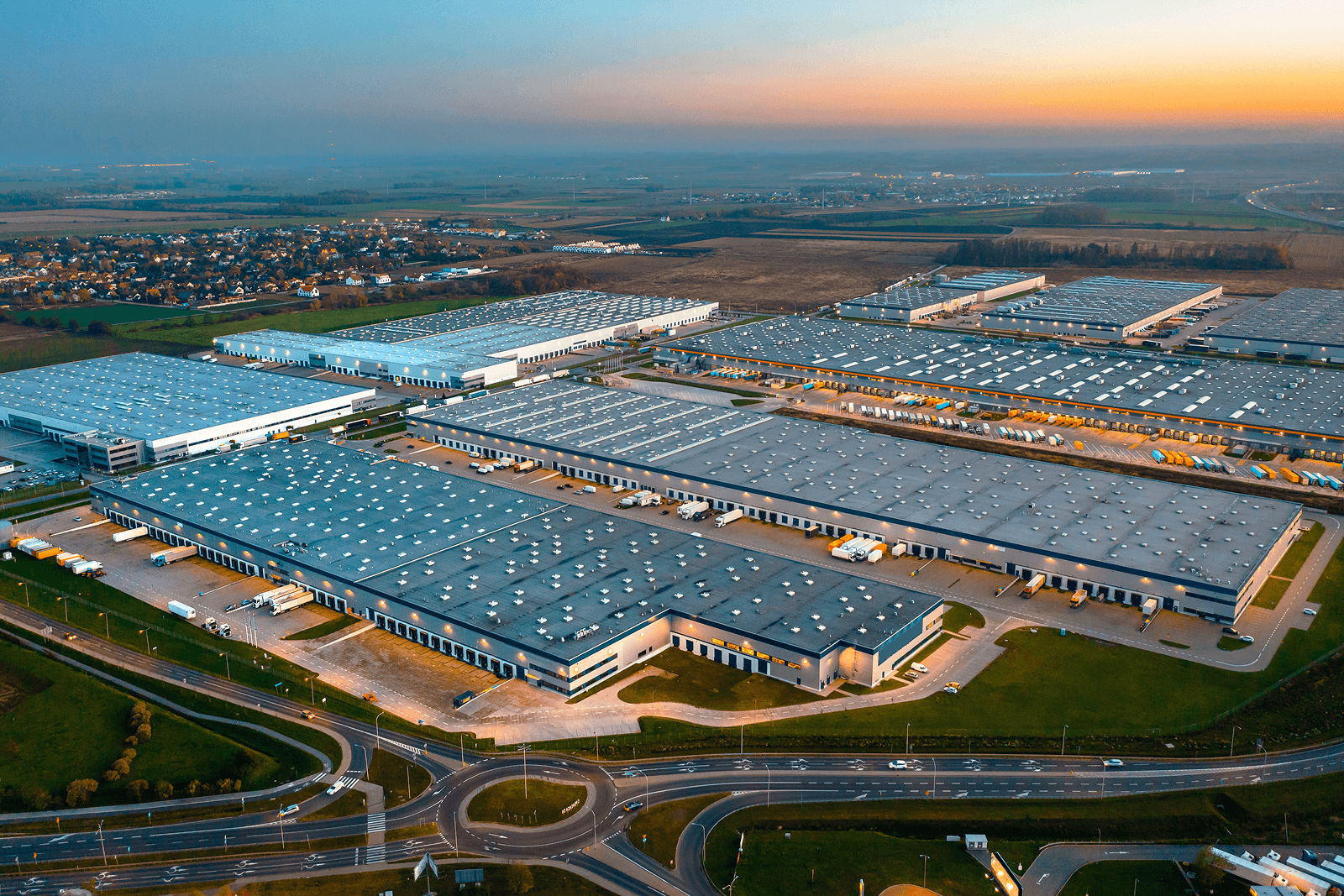
But knowing when an order or shipment shows up is only useful if the facility on the receiving end is equipped with the platform that enables quick action. Unfortunately, most yards, the physical space where trucks arrive, wait, get loaded or unloaded, and leave, are still running on disconnected systems. For a lot of companies, that’s where things start to break down.
Every facility has a finite number of dock doors, parking spots, and staging areas. How well you use them determines how much volume you can push through without building more. But when the yard runs slowly, the impact doesn’t stay in the yard. Warehouse teams wait on inventory that’s sitting in a trailer fifty feet from the dock door. Outbound shipments miss their windows because inbound freight couldn’t get unloaded on schedule. Production plans built around expected arrival times fall apart. And sourcing over-orders because they don’t know what current inventory exists in the yard. What looks like a facility problem behaves like a supply chain problem.
The costs are real but hard to see. Detention charges, driver wait times, unnecessary yard moves, audits by the warehouse team, and overtime labor to make up for earlier delays. None of these show up as a single line item. They’re spread across transportation, labor, and facility budgets in ways that make them easy to miss one at a time but significant in aggregate. For a large shipper running dozens of facilities, it adds up to something material.
There’s also a risk dimension most organizations underestimate. How many companies have real-time awareness of what’s physiy on their property right now? Which trailers, carrying what freight, belonging to which carriers, in what condition? That’s an inventory accuracy problem, a temperature protection problem, a security problem, and in regulated industries, a compliance problem.
The yard sits at the convergence point where transportation, warehousing, labor, and carrier relationships all meet. Inefficiency there raises costs directly and degrades the performance of every connected supply chain motion. Most companies should be getting more throughput and return from their existing facility assets than they are. Multiply that across a network of dozens or hundreds of facilities, and it stops being an operational nuisance and becomes a problem worth solving at the executive level.
Walk into any busy distribution center and watch what the facility team spends their time on.
Collecting information at the gate, verifying appointments, issuing instructions to drivers. Rescheduling appointments when ETAs shift, which they always do, and idly waiting for a truck to arrive. Assigning dock doors and yard spots. Coordinating spotter moves. Trying to identify detention risk before it turns into a charge.
None of these require deep expertise. They’re repetitive coordination tasks that someone has to do hundreds of times a day across dozens of trucks. They’re also the first things to fall through the cracks when volume spikes or something unexpected happens, which is most days.
The people doing this work aren’t failing. They’re managing an environment with a lot of moving parts using radios, spreadsheets, whiteboards, dated systems and memory. When they do have ‘modern’ technology, it’s usually multiple fragmented systems that do not and cannot communicate with each other. This approach works until it doesn’t. And when it doesn’t, the cost shows up as a detention invoice three weeks later or a missed appointment and lost trailer that nobody can explain.
When people hear “yard automation,” they tend to picture autonomous trucks or massive infrastructure projects. The version that’s getting traction is quieter than that, and a lot more practical.
Think about a truck pulling up to your gate. A camera reads the trailer number or the driver enters his load number on a kiosk, the system matches it to the expected appointment and confirms the load details, and the driver gets a dock assignment on their phone. Two minutes from arrival to direction, no gate guard interaction required.
Or say an inbound shipment’s ETA slips by three hours. The appointment reschedules based on the new arrival window, the carrier gets notified, and the dock calendar adjusts. Nobody had to make a phone .
A spotter opens their tablet and sees their next move already prioritized. This trailer is approaching a detention threshold. That one is carrying inventory the production schedule needs today. The decisions about what to move and when are informed by context that already exists in the network.
These are the kinds of decisions that are manageable at low volume. But at a facility processing hundreds of trucks a day, or across a network of thirty or forty sites, no team can keep up manually. The value of automating them is that they scale without adding headcount.
This is the part that separates useful automation from a digital version of the same manual process.
A standalone yard management system can replace your clipboard. It can give you a digital map of your lot and a log of what happened. That’s a step forward. But it can’t reschedule an appointment based on a shipment that’s still 200 miles out. It can’t prioritize a trailer move because it knows what’s on that trailer and what the warehouse needs next. It can’t flag a detention risk based on carrier dwell patterns across your whole network.
Automation becomes useful when it’s connected to what’s happening beyond the facility fence. Carrier locations, shipment status, order priorities, historical patterns. That’s what turns a digital yard map into something that helps people make better decisions faster, instead of having to chase down information or guess.
The visibility investments have been worth it. Companies know more about their in-transit supply chains than ever before. The next step is making sure that information reaches the people who act on it, at the gate, in the yard, at the dock door. That’s where the ROI on all of that upstream data shows up. A truck that gets unloaded two hours faster. A detention charge that never happens.
Know what to ask before you buy
This guide gives you five questions to bring into your next vendor conversation. They’ll help you focus on what performs in your facility, not just what demos well.