
In this article:
A few years ago, I spent four hours with the number two executive at one of Europe’s largest manufacturers. We walked through everything I’d learned building operational technology at Michelin — the architecture, the data requirements, the organizational changes needed to make it work. Every fifteen minutes, someone in the room would say, “Yes, you’re right,” or “Exactly, that’s our problem too.”
At the end of the meeting, I asked what they’d do next. The response: “Wow, it’s so complicated.”
Nothing happened.
I tell you this because right now, every manufacturing VP is having conversations about AI. Your CEO forwarded you an article from Harvard Business Review. Vendors are flooding your inbox. Your team is asking what your “AI strategy” is. Most of these conversations are either too technical — explaining algorithms you don’t need to understand — or too vague, promising that AI will “transform operations” without saying how.
What’s missing is a way to cut through the noise. After two decades managing global supply chain operations and another few years watching companies try to implement this technology, I’ve learned that four questions separate real, operational AI from demos that fall apart in production.
When we started experimenting with machine learning at Michelin in 2013-2014, we had an advantage most manufacturers don’t: 25 years of accumulated operational data. Starting in 2001, we’d built a data warehouse that captured daily snapshots of everything — production plans, orders, shipments, internal transfers. That became our “golden energy” for building predictive models.
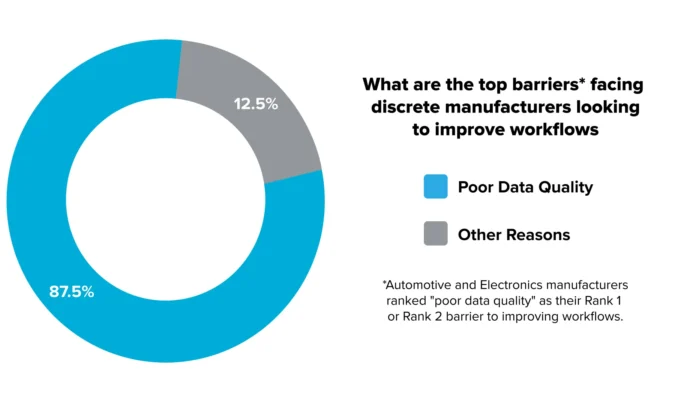
But even with that foundation, our biggest problem was unstructured data. Transportation documents came in every format imaginable. Suppliers sent information through email, portals, paper, fax. Carriers had their own systems. We spent enormous amounts of time just trying to get data into a usable format.
Now, large language models have made it possible to structure previously unusable data without massive standardization projects. Suddenly, you can throw PDFs, emails, and portal screenshots at a system and have it extract what matters.
This is the first filter question for any AI vendor: show me how this works with data in the format we have it today, not after we clean it up.
If they start talking about 12-month integration timelines, requirements to standardize your data first or getting your suppliers to use their portal, you’re looking at something that won’t work in production. Your operations don’t generate pristine data. They never will. Solutions that promise to work “after you fix your data” are just deferring failure.
Ask what happens when a supplier sends data in a format they’ve never seen before. Does it require custom coding? How long does that take?
If the answer isn’t “the system handles it,” keep looking.
Managing tire supply chains meant navigating completely different operational realities depending on the channel. For automotive OEMs, we had to maintain 100% service level. Miss a tire delivery to an assembly line and you’re out of business. But a huge percentage of our business was retail, where the constraints were totally different. On-shelf availability mattered, but so did inventory positioning, promotional timing, and dealer relationships.
Each context required different decision logic, different risk tolerances, and different escalation protocols. A solution that worked for OEM deliveries would fail spectacularly in retail distribution.
This is where most “AI solutions” fall apart. They promise to “optimize workflows” or “reduce manual tasks” without demonstrating any understanding of what decisions need to be made or what constraints matter in your specific environment.
Here’s how to test it: describe a real scenario from your world with actual constraints. Then ask the vendor to walk you through what decisions their AI would make, what trade-offs it would evaluate, and when it would escalate to a human.
If you get generic answers about automation or efficiency, they don’t understand operations. The AI won’t either.
Assuming the AI can handle your data and understands your operations, you still have to decide where to deploy it first.
Most manufacturers begin with inbound flows, which makes sense. Missing raw materials creates an immediate and measurable financial impact — line stoppages, detention fees, and expedite costs. You also have more control than you do on the customer-facing side. In general, fewer parties involved, clearer data, and direct relationships with suppliers.
Start where operational failure has immediate financial consequences, but optimize for simplicity of execution. Get a win, prove the concept, then expand.
Importantly, though, I’ve learned that most VPs (myself included) underestimate how much of this work needs to be done. You probably haven’t mapped all the manual coordination happening across your network. Someone is checking on delayed shipments. Someone is ing carriers about missing documentation. Someone is rescheduling appointments when trucks run late. Someone is answering the same tracking questions from customers over and over.
Once you solve inbound supplier coordination, the same capabilities extend to outbound fulfillment, customer service, documentation workflows, and scheduling. Start with the obvious pain point to prove it works. Then audit your operations and ask, “Where else are we doing this same pattern of high-volume, context-dependent coordination work?”
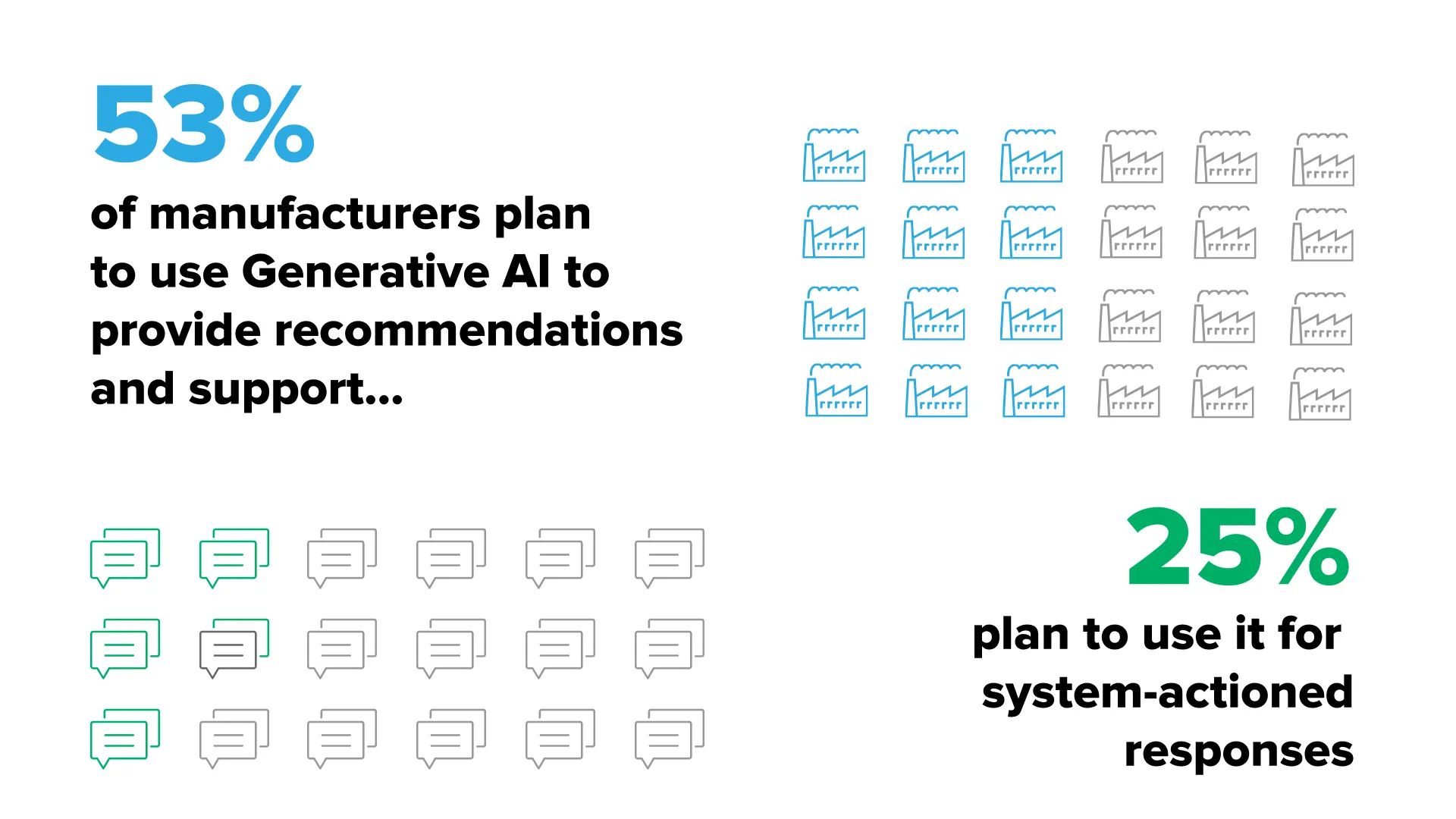
The category is still emerging. Most manufacturers don’t fully understand what’s possible with AI-powered automations that have emerged in the last 18 months. That’s not a criticism — the technology has changed faster than most people’s mental models of what “automation” means.
Operational AI solves execution problems. But only if execution is your constraint. Sometimes it isn’t.
If you lack basic visibility, then operational AI is premature. If you’re still finding out about delays from customer complaints rather than real-time alerts, you need to see problems before you can automate responses to them. Said differently, when your constraint is strategic, automation just helps you execute a bad plan more efficiently. Wrong network design, wrong supplier base, wrong inventory positioning — fix the strategy first, then optimize execution.
Or perhaps manual coordination is cost-effective due to your operational footprint, so you don’t need to force automation just to keep up with trends. I’ve seen this in certain regions where labor costs are low enough that technology doesn’t move the financial needle. AI should solve expensive problems, not automate cheap ones.
If your organization isn’t ready, the technology won’t help. During that four-hour meeting with the aerospace executive, the technical barriers weren’t the problem. The organizational complexity was. If your culture defaults to “everything escalates to planning” with no ground-level decision rights, you’ll just automate escalation. Sometimes you need to solve organizational readiness before technology can help.
So if the answer to this question is, “We could be better, but we’re getting by,” then there might be higher-ROI places to invest.
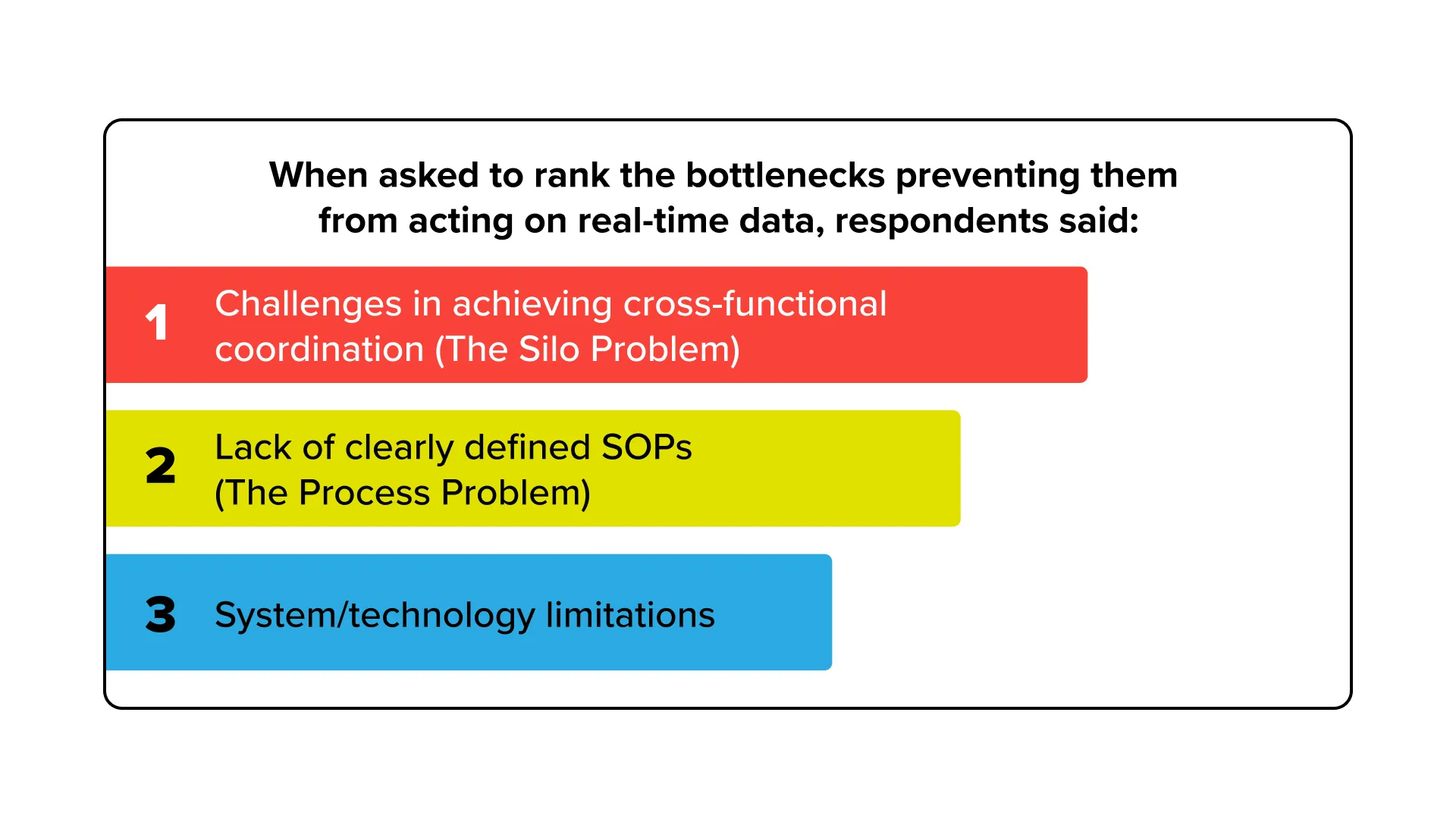
The hardest part of implementing operational technology at Michelin wasn’t the software. It was convincing planning teams to give operational staff the authority to make decisions with support from digital tools.
There’s a natural tension. Planning teams own the S&OP process. They set targets, allocate inventory, make trade-offs. When you empower the operations floor to react in real time — especially with AI assistance — it can feel like undermining the plan.
But during the 2008-2009 financial crisis, we learned that when flows become unpredictable and you can’t afford safety stock buffers, the best way to protect both cash and customer service is to make decisions as close to the problem as possible. The people on the ground see issues first. They understand the operational context. If you force everything to escalate up to planning for resolution, you’re too slow.
This isn’t about replacing planning. It’s about creating an operational layer that can execute the plan even when reality doesn’t cooperate. Before investing in AI, honestly assess whether your team is ready to change how they work, or if they simply want better reporting.
If it’s the latter, save your money.
I’ve seen companies with solid technology fail because they weren’t ready organizationally. I’ve also seen companies with mediocre technology succeed because they committed to changing how they operate. These questions help you figure out which category you’re in.
The vendors will still call. Your CEO will still forward articles. Your team will still ask about your AI strategy. At least now you have a framework for separating what’s real from what’s just noise.
Want to see how FourKites’ operational AI handles your data format and operational complexity?